

Rockfall Netting for Mountain and Slope Stability
Rockfall netting is one of the most effective engineering solutions for protecting roads, railways, buildings, and infrastructure located near steep slopes and mountainous terrain. As climate change, erosion, and human construction continue to destabilize natural slopes, the demand for reliable slope protection systems has increased significantly worldwide.
This article explains what rockfall netting is, how it works, its key applications, and why it is essential for modern slope stabilization projects.
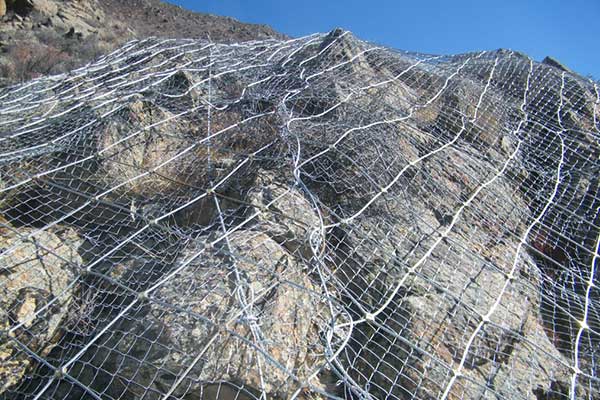
What is Rockfall Netting?
Rockfall netting is a protective system made of high-tensile steel wire mesh designed to stabilize slopes and prevent loose rocks from falling onto roads, structures, or working areas below.
It is typically installed on:
- Mountain slopes
- Roadside cuttings
- Railway embankments
- Quarry walls
- Construction excavation sites
The main purpose is not to stop all movement of soil or rock, but to control, contain, and guide falling debris safely.
Why Rockfall Netting Is Important for Slope Stability
Slopes naturally become unstable due to weathering, rainfall, freeze-thaw cycles, and seismic activity. Without protection, even small rockfalls can cause serious hazards.
Rockfall netting provides several critical benefits:
1. Protects Human Life and Infrastructure
Falling rocks can cause vehicle accidents, damage buildings, and endanger workers. Netting acts as a physical barrier to reduce these risks.
2. Prevents Road and Railway Blockages
Rockfall events often lead to road closures and transport disruption. Netting minimizes maintenance costs and downtime.
3. Enhances Long-Term Slope Stability
By securing loose rock fragments, the system reduces progressive slope deterioration over time.
4. Cost-Effective Solution
Compared to tunnels or large retaining walls, rockfall netting is significantly more economical and faster to install.
Materials Used in Rockfall Netting
Rockfall protection systems are designed to withstand high impact forces and harsh environments. Common materials include:
- Galvanized steel wire – corrosion-resistant and durable
- PVC-coated wire mesh – enhanced weather protection
- High-tensile steel cables – used for reinforcement and anchoring
- Rock bolts and anchors – secure the system into stable rock layers
These materials ensure long service life even in extreme mountain climates.
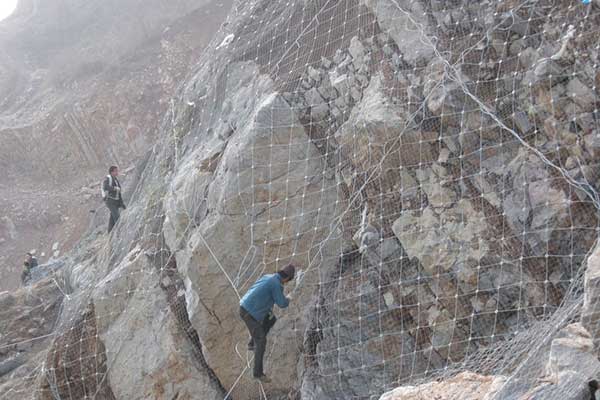
How Rockfall Netting Works
The system functions through a combination of containment and controlled movement:
- Loose rocks detach from the slope surface
- The mesh intercepts and supports the falling debris
- Energy is absorbed and distributed across the net
- Rocks are safely guided to a controlled collection zone at the slope base
This process significantly reduces the kinetic energy of falling rocks, preventing dangerous impact at the bottom.
Installation Process of Rockfall Netting
Proper installation is essential for system performance. A typical installation process includes:
Step 1: Site Survey and Slope Analysis
Engineers assess slope angle, rock conditions, and risk level.
Step 2: Surface Preparation
Loose debris and unstable rocks are removed where necessary.
Step 3: Anchor Installation
Rock bolts or ground anchors are drilled into stable bedrock.
Step 4: Netting Deployment
Steel mesh is rolled out and attached to anchors and support cables.
Step 5: Tensioning and Fixing
The system is tightened to ensure stability and proper load distribution.
Step 6: Inspection and Maintenance Plan
Final checks ensure the system is secure and ready for long-term use.
Applications of Rockfall Netting
Rockfall netting is widely used in various engineering fields:
- Highway and expressway slope protection
- Mountain railway safety systems
- Hydropower station hillside stabilization
- Mining and quarry operations
- Urban hillside construction projects
- Tourism mountain roads and scenic areas
Its versatility makes it suitable for both permanent infrastructure and temporary construction sites.
Maintenance of Rockfall Netting
Although rockfall netting systems are durable, regular inspection is recommended:
- Check for wire breakage or corrosion
- Inspect anchor stability
- Remove accumulated debris at slope base
- Monitor slope movement after heavy rainfall or earthquakes
Proper maintenance ensures long-term performance and safety.
Final Word
Rockfall netting is a critical component in modern slope stabilization and mountain safety engineering. By preventing dangerous rock movement and reducing geological hazards, it plays a key role in protecting infrastructure and saving lives.
If you are planning a slope protection project, contact us today to get a customized slope protection plan and ensure long-term stability for your project.
 English
  Español
  Français
  العربية
  Português
  Deutsch
  Русский
  Italiano