

Rolling Barrier vs Steel Guardrail: Which is Better?
Rolling barriers and steel guardrails are both used to reduce the severity of roadside accidents. However, they differ in structure, impact performance, cost, maintenance, and suitable applications.
This guide compares rolling barriers vs steel guardrails to help you choose the right roadside safety system.
What is a Rolling Barrier?
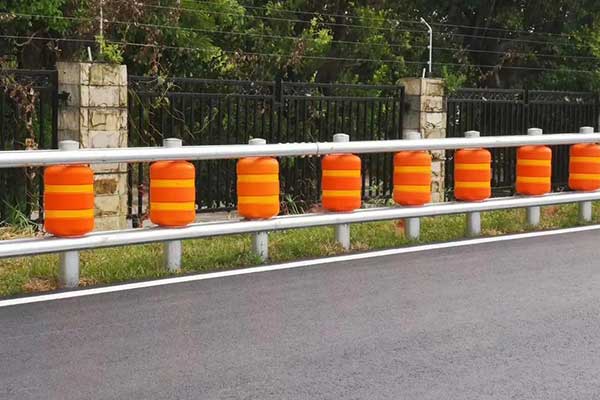
A rolling barrier, also known as a roller barrier or rolling guardrail, is a roadside safety system that uses rotating cylindrical rollers mounted between steel posts.
When a vehicle hits the barrier, the rollers rotate and help convert part of the impact energy into rotational energy. Instead of simply stopping the vehicle, the system is designed to guide it back toward the roadway while reducing the severity of the collision.
A typical rolling barrier system includes:
- Rotating EVA or polyurethane rollers
- Steel posts
- Horizontal steel rails
- Connecting frames
- Reflective components
- Anchoring systems
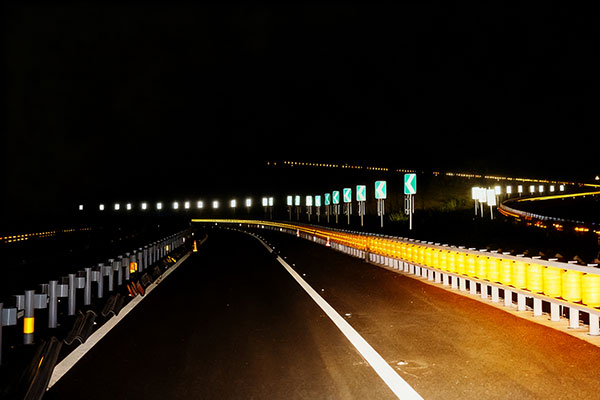
Because of its distinctive yellow or orange rollers, the barrier can also provide good visual guidance, especially on curves and at night.
What is a Steel Guardrail?
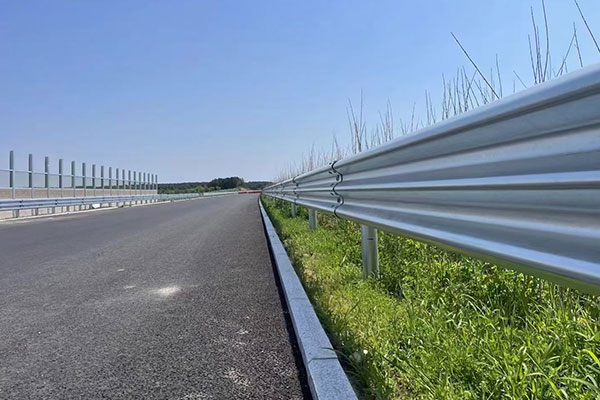
A steel guardrail is a conventional roadside restraint system made primarily from galvanized steel beams and posts.
Common types include:
- W-beam guardrails
- Thrie-beam guardrails
- Bridge guardrails
When a vehicle collides with the system, the steel beam deforms and transfers the impact force through the posts and surrounding structure. This deformation helps absorb collision energy and prevents the vehicle from leaving the roadway or entering dangerous areas.
Steel guardrails are widely used on highways, bridges, mountain roads, medians, and roadside slopes.
Rolling Barrier vs Steel Guardrail: Key Differences
| Feature | Rolling Barrier | Steel Guardrail |
|---|---|---|
| Structure | Rollers + steel frame | Steel beams + posts |
| Impact handling | Uses rotation and redirection | Uses controlled deformation |
| Visibility | High | Moderate |
| Initial cost | Higher | Lower |
| Installation | More complex | Simpler |
| Maintenance | Modular component replacement | Damaged beams/posts replaced |
| Best use | Curves and high-risk sections | General roadside protection |
Rolling Barrier vs Steel Guardrail: Detailed Comparison
The main differences between the two systems can be seen in their impact performance, cost, maintenance, visibility, and applications.
1. Impact Absorption
Steel guardrails absorb collision energy mainly through beam deformation.
Rolling barriers use rotating rollers to reduce direct friction and help convert part of the impact into rotational movement.
Both systems are designed to reduce accident severity, but they manage impact differently.
2. Vehicle Redirection
Rolling barriers are designed to guide vehicles along the barrier after impact. The rotating rollers help reduce friction and may allow smoother redirection.
Steel guardrails also redirect vehicles when properly designed and installed, but they rely mainly on beam deformation and barrier tension.
Rolling barriers are often considered for:
- Sharp curves
- Highway ramps
- Mountain roads
- Tunnel entrances
- Accident-prone sections
3. Cost
Steel guardrails generally have a lower initial cost and are more economical for long highway sections.
Rolling barriers cost more because they include rollers, frames, rails, and more complex connections.
For this reason, rolling barriers are often installed only in selected high-risk areas.
4. Maintenance
After a severe impact, steel guardrails may require replacement of damaged beams, posts, bolts, or terminals.
Rolling barriers also require inspection, but damaged rollers or individual components can often be replaced separately.
Both systems should be inspected regularly after collisions.
5. Visibility
Rolling barriers usually provide better visual guidance because their rollers are often yellow, orange, or other highly visible colors.
Reflective elements can also improve nighttime visibility.
Steel guardrails can be fitted with reflectors or delineators, but the barrier itself is usually less visually noticeable.
6. Durability
Steel guardrails are normally hot-dip galvanized for corrosion resistance and can provide a long service life.
Rolling barriers combine galvanized steel structures with polymer rollers. Their durability depends on roller quality, UV resistance, weather conditions, and impact frequency.
7. Applications
Rolling barriers are more suitable for:
- Sharp curves
- Mountain roads
- Highway exits
- Tunnel approaches
- Bridge approaches
- Accident-prone road sections
Steel guardrails are widely used for:
- Highways
- Bridges
- Medians
- Rural roads
- Roadside slopes
- Embankments
- General roadside protection
Rolling Barrier Advantages and Disadvantages
Advantages
- Good vehicle redirection
- High visibility
- Reduced friction during side impacts
- Suitable for curves and high-risk sections
- Modular components
Disadvantages
- Higher initial cost
- More complex structure
- More components to inspect
Steel Guardrail Advantages and Disadvantages
Advantages
- Lower cost
- Simple structure
- Easy installation
- Widely standardized
- Suitable for large highway projects
- Easy to source replacement parts
Disadvantages
- Beams can deform after heavy impact
- Damaged sections may need replacement
- Lower visibility than rolling barriers
Rolling Barrier vs Steel Guardrail: Which Is Better?
The better option depends on the road conditions and project requirements.
Choose a steel guardrail if you need:
- Cost-effective roadside protection
- Long-distance highway installation
- Simple installation
- Standard W-beam or Thrie-beam systems
Consider a rolling barrier if the road has:
- Sharp curves
- Frequent side-impact accidents
- High vehicle speeds
- High-risk sections
- Greater vehicle redirection requirements
In some projects, both systems can be used together. Steel guardrails can protect general road sections, while rolling barriers can be installed at particularly hazardous locations.
Conclusion
When comparing rolling barrier vs steel guardrail, steel guardrails are generally more economical and suitable for most conventional road projects, while rolling barriers provide stronger visibility and vehicle redirection for high-risk locations.
The final choice should consider road geometry, traffic speed, safety requirements, budget, and local standards.
Roadsky supplies rolling barriers, W-beam guardrails, Thrie-beam guardrails, and related highway safety products. Contact us for specifications, project recommendations, and a quotation.
 English
  Español
  Français
  العربية
  Português
  Deutsch
  Русский
  Italiano