

GPS Solar Piling Machine: Features and Benefits
Accurate pile positioning is essential for efficient solar farm construction. As photovoltaic projects become larger and more complex, contractors increasingly rely on positioning technology to improve installation efficiency and maintain consistent foundation layouts.
A solar piling machine with GPS functionality helps operators locate pile installation points based on predefined project coordinates. Depending on the system configuration, it may also support advanced positioning, digital layout guidance, and construction data recording.
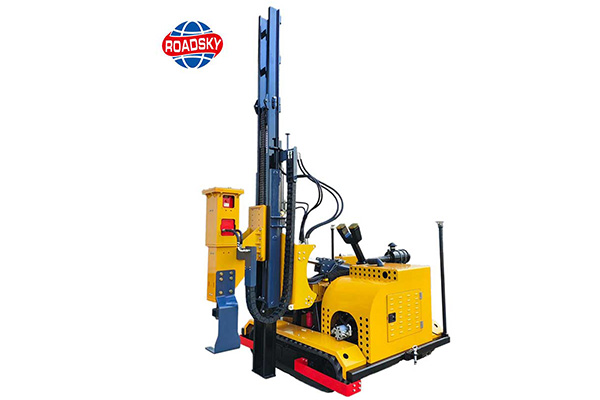
What is a Solar Piling Machine?
A solar piling machine is specialized equipment used to install foundation piles for ground-mounted photovoltaic systems. When equipped with GPS positioning technology, it helps operators navigate to planned pile locations based on project layout data.
Depending on the configuration, GPS functionality may include coordinate navigation, positioning guidance, and integration with compatible digital layout systems. These features are particularly useful for large solar farms where accurate pile placement is important for subsequent mounting structure installation.
Key Features of a Solar Piling Machine with GPS
GPS Positioning System
GPS positioning helps operators identify planned pile locations and reduces dependence on manual marking. For projects requiring higher positioning accuracy, certain configurations may support RTK GNSS technology. Actual accuracy depends on the positioning system, correction data, calibration, and site conditions.
Efficient Pile Driving
The machine uses a hydraulic or impact-driven system to install foundation piles. Depending on the model, it may accommodate different pile profiles and dimensions for solar mounting structures.
Flexible Operation and Mobility
Crawler-mounted solar piling machines can move across many unpaved and uneven construction sites, helping operators travel between pile installation points efficiently.
Benefits of GPS Functionality in Solar Piling
1. Improved Positioning Efficiency
GPS guidance helps operators navigate to predefined pile locations, potentially reducing the time spent on manual marking and repeated surveying.
2. Better Installation Consistency
Following project coordinates helps maintain the planned pile layout, supporting the accurate installation of solar mounting structures.
3. Reduced Labor and Rework
GPS positioning may reduce repetitive layout tasks and help minimize errors associated with manual marking. Actual savings depend on project size, site conditions, and equipment configuration.
4. Improved Project Management
When supported by compatible software, digital positioning and installation records can help construction teams monitor progress and identify potential deviations.
Applications of Solar Piling Machines
Solar piling machines with GPS functionality are suitable for various photovoltaic construction projects, including:
- Utility-scale solar farms: Installing foundation piles across large solar power plants.
- Ground-mounted solar systems: Supporting the installation of steel solar mounting structures.
- Agrivoltaic projects: Following specified pile layouts while accommodating agricultural activities.
- Remote solar installations: Supporting coordinate-based positioning at sites where manual layout work may be challenging.
Frequently Asked Questions
No. GPS positioning is an optional feature on some machines. Confirm the available positioning functions with the supplier before purchasing.
Not always. Standard positioning may be sufficient for projects with less demanding layout requirements, while tighter engineering tolerances may justify RTK-supported positioning.
GPS positioning alone does not automatically control pile depth. Depth control requires appropriate measurement or control functions, depending on the machine configuration.
Conclusion
GPS functionality can make a solar piling machine more efficient for projects that require accurate coordinate-based pile positioning. By reducing manual layout work and supporting consistent installation workflows, it can provide practical benefits for large-scale solar farm construction.
Looking for a suitable solar piling machine for your photovoltaic project? Contact Roadsky to discuss your requirements and explore the right equipment configuration.
 English
  Español
  Français
  العربية
  Português
  Deutsch
  Русский
  Italiano