

Solar Pile Drivers for Global Renewable Energy Projects
As solar energy projects expand worldwide, contractors need efficient equipment to install thousands of foundation piles accurately and on schedule. A enfonceur de pieux solaire is designed specifically for driving steel posts and foundation piles into the ground for photovoltaic mounting systems.
Compared with conventional drilling and concrete foundations, pile driving can reduce installation time, labor requirements, and foundation costs. This makes solar pile drivers an important part of utility-scale solar farm construction.
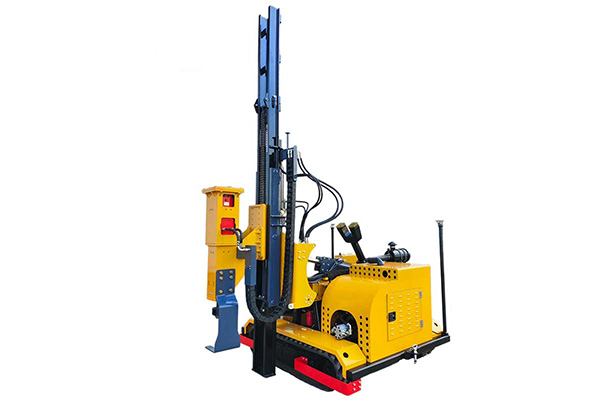
Qu'est-ce qu'un enfonceur de pieux solaire ?
A solar pile driver is a specialized machine used to install the steel piles that support solar panel mounting structures. Depending on the machine configuration, it can drive C-type, U-type, H-type, and other common solar piles.
Crawler-mounted models are widely used because they provide good stability and can travel across uneven or soft construction sites. Some machines can also be equipped with drilling attachments for hard soil or rocky ground.
Applications in Solar Farm Construction
Solar pile drivers are mainly used in:
- Ground-mounted photovoltaic power plants
- Utility-scale solar farms
- Commercial solar installations
- Agricultural photovoltaic projects
- Desert and remote-area solar projects
- Solar carports and mounting systems
They are suitable for projects ranging from small commercial installations to large renewable energy developments requiring thousands of piles.
Avantages de l'utilisation de foreuses de pieux solaires
Une installation plus rapide
Solar pile drivers can install piles much faster than manual foundation methods. Their high working efficiency helps contractors complete large solar projects within tight construction schedules.
Lower Foundation Costs
Direct pile driving can reduce the need for excavation, concrete pouring, and long curing periods. This can lower material, labor, and transportation costs.
Accurate Pile Positioning
Modern machines can use GPS positioning, automatic leveling, or depth-control systems to improve installation accuracy. Correct pile spacing and alignment make the following mounting-system installation easier.
Adaptability to Different Ground Conditions
Solar pile drivers can work in soil, sand, clay, gravel, and other ground conditions. For harder ground, pre-drilling equipment can create pilot holes before the piles are driven.
Better Mobility
Crawler solar pile drivers can move efficiently across large construction sites and maintain stability on uneven terrain. This is especially valuable for solar farms in deserts, hills, farmland, and remote locations.
Solar Pile Drivers for Different Regions
Solar projects around the world face different construction conditions. Desert projects in the Middle East may require equipment capable of operating in high temperatures and sandy soil. Projects in Africa or South America may need reliable machines that are easy to maintain in remote areas.
In Europe and Australia, contractors may place greater importance on installation accuracy, safety, emissions, and compliance with local requirements. Choosing a machine according to the actual site environment helps improve efficiency and reduce downtime.
How to Choose a Solar Pile Driver
Before purchasing a solar pile driver, consider the following factors:
1. Pile Type and Size
Confirm the pile profile, length, width, and wall thickness. The machine’s hammer and clamping system should be suitable for the required pile specifications.
2. Required Driving Depth
Solar pile depth depends on the structural design, wind load, soil conditions, and local engineering requirements. Select a machine with enough driving force and working stroke for the project.
3. Ground Conditions
Soft soil may allow direct pile driving, while compacted gravel or rocky ground may require pre-drilling. A multifunctional machine with both drilling and piling capabilities can be useful for variable ground conditions.
4. Project Scale
For large solar farms, installation speed, fuel efficiency, automation, and machine reliability are especially important. Smaller projects may benefit from a compact and easy-to-transport model.
5. Positioning Technology
GPS-assisted pile drivers can help operators locate pile positions, control installation depth, and improve consistency. This reduces repeated measurement work and supports more efficient construction.
6. After-Sales Support
Spare parts availability, technical guidance, operator training, and remote troubleshooting should also be considered, particularly for international projects.
Roadsky Solar Pile Drivers
Roadsky supplies solar pile drivers for photovoltaic foundation projects worldwide. Available options include crawler-mounted machines, GPS-assisted models, remote-control systems, and multifunctional machines capable of both drilling and pile driving.
Our solar pile drivers are designed for efficient operation, accurate installation, and reliable performance in different working environments. We also provide technical support, operating guidance, spare parts, and export assistance for international customers.
If you are planning a solar farm or renewable energy foundation project, contact Roadsky with your pile specifications, required depth, ground conditions, and project scale. Our team will help you select a suitable solar pile driver for your application.
FAQ
Yes, but hard or rocky ground may require pre-drilling before pile installation. A drilling-and-piling machine is usually more suitable for these conditions.
Yes. Many machines can install several pile profiles by changing the clamping or guiding components. The pile dimensions should be confirmed with the manufacturer before ordering.
GPS is not required for every project, but it can significantly improve pile positioning, depth control, and construction efficiency on large solar farms.
 English
  Español
  Français
  العربية
  Português
  Deutsch
  Русский
  Italiano